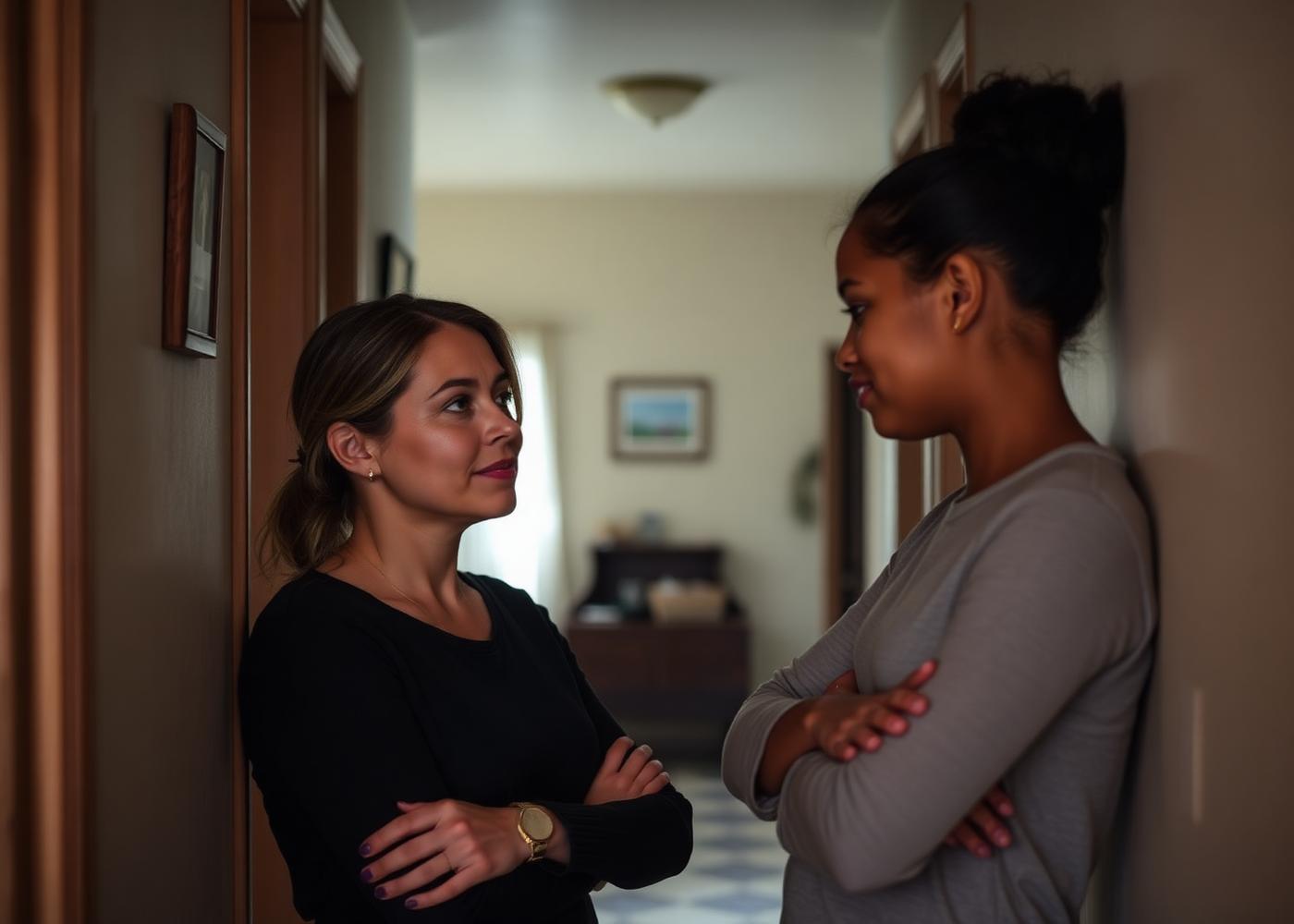
When talking stops working: 7 signs a conversation needs a different way to begin
Some conversations start with a simple intention and always end up in the same place. Seven signs that the problem is no longer the topic, but the way the conversation begins.

Some conversations start with a simple intention — explaining something, asking for a change, clearing up a problem — and a few minutes later they end up exactly where they always do.
The same sentences. The same defenses. The same exhaustion.
Still talking does not always mean still communicating.
Sometimes, before looking for new answers, what needs to change is the way the conversation begins. This happens between partners, between parents and children, between siblings, between friends, inside a work team, at a school, among neighbors, and even in a negotiation with legal advice on the table.
Very often the problem is not that people do not want to resolve the conflict. The problem is that they are trying to resolve it inside a conversation that has already fallen into a pattern of tension, defense, blame, repetition or shutdown.
These are seven signs worth recognizing early.
1. You can already predict exactly how it will end
When a conversation has been repeated so many times that both people can anticipate the lines, the reactions and the ending, there is very likely a pattern already in place.
- “You always do the same thing.”
- “I knew you were going to say that.”
- “There is no point talking to you.”
At that point the problem is no longer only the topic; it becomes the dynamic. Two people can agree on the substance and still clash on the form, because each one walks in braced against the ending they already imagine.
If you already know how it will end, you are probably not discussing the problem: you are repeating the pattern.
2. You listen to reply, not to understand
Listening and mentally preparing your defense are not the same thing. When we are emotionally activated, we are often building our next answer while the other person is still speaking, looking for the example that proves us right or waiting for the weak spot in their argument.
The result is a conversation where both people talk a lot and neither feels heard.
Recovering curiosity is one of the simplest and most powerful moves available. It only takes returning to one internal question:
3. Everything turns into an accusation
A legitimate need can turn into an attack in very few words. And when a message arrives as an accusation, the other person no longer responds to the content: they respond to the threat.
En lugar de
“You never do anything.”
Prueba con
“I would like you to be more involved in this. How could we share it?”
The meaning has not changed: there is still a need and a request. What changes is the chance that the other person can hear it without defending themselves.
In PACTO, AITANA — the platform's supportive artificial intelligence — can help exactly at that point: rephrasing a difficult message while keeping its original intention, flagging when a sentence may land as blame, and offering clearer alternatives. It does not judge, it does not decide who is right, and it never sends or changes anything without the person's authorization.
4. The current conflict starts dragging in the whole past
This is accumulation. A conversation about something that happened today ends up carrying everything that was never resolved:
- “And on top of that, three years ago…”
- “Your family always…”
- “You never…”
- “You always…”
When the entire history of a relationship enters a single conversation, solving one concrete problem becomes almost impossible. Not because old wounds do not matter, but because each one needs its own space, its own time and its own agreement.
A conversation can hold one topic. It can rarely hold ten years.
5. One of you would now rather stay quiet
Permanently avoiding a conversation does not mean the conflict has gone. It means it stopped being said out loud.
Silence can signal exhaustion, fear that the conversation will escalate, a sense of futility (“it makes no difference what I say”), or a legitimate need for self-protection.
6. The conversation ends up being about who is to blame
Looking for blame and looking for agreements are two different conversations, even when they begin with the same words.
En lugar de
“Who started it?”
Prueba con
“What do we need to be different from now on?”
Understanding each side's responsibility does not mean removing boundaries or consequences. It means stopping the search for a verdict and starting to define what will actually change.
7. You both want to fix it, but no longer know how
This is probably the most hopeful sign of all.
The wish to resolve a conflict can remain intact even when the communication tools have run out. There are people who love each other, respect each other or need to keep working together, and who still cannot find a safe way to start the conversation.
When that happens, willingness is not what is missing: structure is. That is where a tool like PACTO can add something different, without taking the place of therapy, legal advice or the decisions that belong to the people involved.
Change the conversation before trying to change the person
We often try to resolve a conflict by getting the other person to think, feel or act differently. It is a long road and frequently an ineffective one.
There is an alternative: change the structure of the conversation first.
- Allow time to think before answering.
- Separate reaction from response.
- Organize what each side needs.
- Rephrase messages that may land as an attack.
- Identify common ground, however small.
- Build concrete agreements that can be reviewed.
PACTO exists to create exactly that middle space: technology that supports people through a difficult conversation so that, whenever possible, they can go back to talking directly.
PACTO was not created to replace human conversations. It was created to help bring them back.
PACTO uses technology so that, whenever possible, we can set it aside again.
Closing
Not every conversation needs more words.
Some need a pause. Others need a different question. Others simply need a different way to begin.
Because resolving a conflict does not always start by finding out who is right. Sometimes it starts when two people manage to listen to each other again.
Is there a conversation you have been putting off? PACTO can help you prepare what you want to say and open a different space to talk.
Talk to usDid you find this article useful?
Loading ratings…
Would you like to tell us more?
You can share your impression of this piece with us. We read every message, though we can't always reply.
Send us your thoughts
About the author
Ricardo Pineda Vélez
Psicólogo · Fundador de PACTO Resolución
Psicólogo de la Universidad Pontificia Bolivariana y fundador de PACTO Resolución. Acompaña conversaciones difíciles desde una mirada humanista, relacional y orientada a la construcción de acuerdos sostenibles.
Editorial review
Equipo PACTO Resolución
Contenido revisado desde una perspectiva psicológica, relacional y de resolución colaborativa de conflictos.